How to evaluate Utah neighborhood safety using objective data, local research, and your own comfort level.
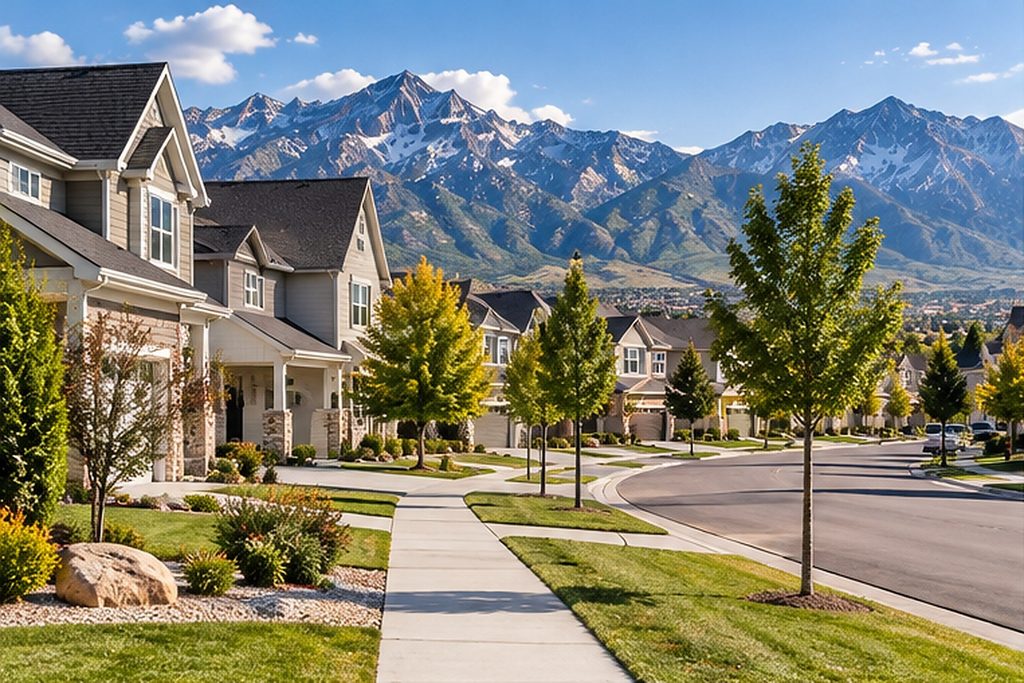
Safety is best evaluated at the neighborhood level using data, observation, and the priorities that matter to you.
When buyers ask, “What are the safest places to live in Utah?” the most useful answer is not a fixed list of cities. Safety is personal, neighborhood conditions can change, and crime data looks different depending on the year, reporting agency, population, and type of offense being measured. A community that feels comfortable for one buyer may not feel right for another. The better approach is to research objective information, visit the places you are considering, and make a decision based on your own priorities.
For a Utah homebuyer, that means looking beyond a headline or an online ranking. Use reliable crime statistics, compare similar areas consistently, and pay attention to the details that affect your daily experience: lighting, traffic, sidewalks, visibility, proximity to services, commute patterns, and how the neighborhood feels at different times of day.
| Quick answerThere is no single list of “safest” Utah communities that fits every buyer. Compare official crime data, research the exact neighborhood, visit at different times, and decide what feels right for your own situation. |
Start With Objective Utah Crime Data
Utah makes official crime information available through the Department of Public Safety’s Bureau of Criminal Identification. Its Crime in Utah dashboards use data reported by local law-enforcement agencies through the Uniform Crime Reporting system and allow users to filter by year, category, county, city, and offense. The FBI’s Crime Data Explorer is another useful source for reported crime information.
These tools are helpful, but they should not be treated as a perfect scorecard. Utah’s BCI notes that the data depends on what local agencies report and that missing or delayed reporting can affect what appears in the dashboard. Crime data also reflects jurisdiction boundaries, which do not always match the way buyers think about neighborhoods. Compare the same categories, time periods, and geographic level before drawing conclusions.
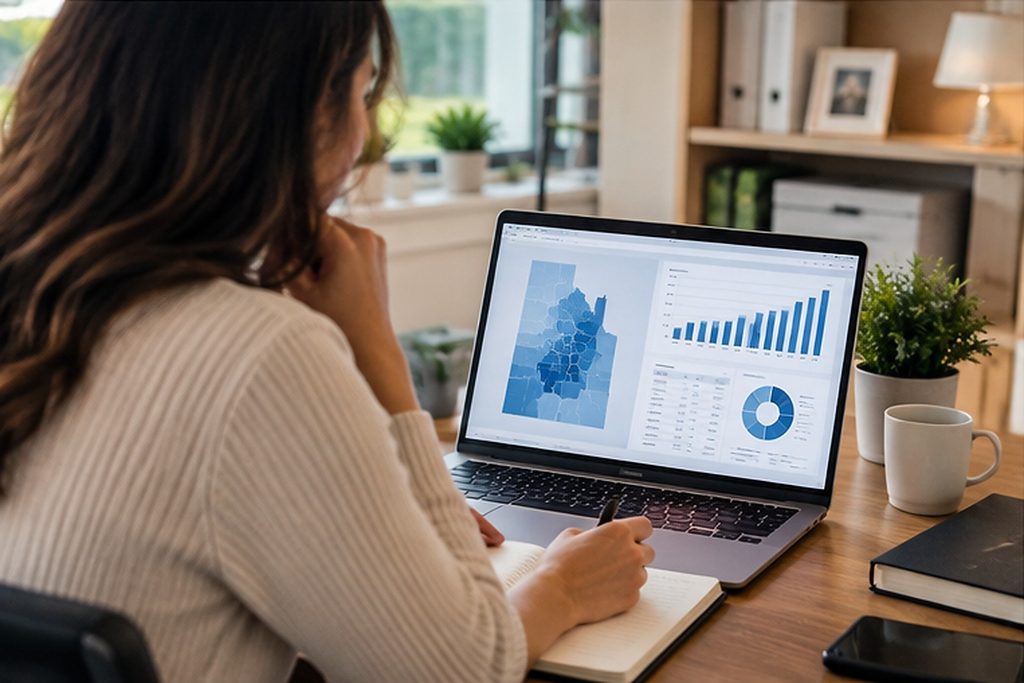
Use official Utah and federal crime-data tools to compare the specific areas you are considering.
Visit the Neighborhood at Different Times of Day
Numbers cannot tell you everything about how a neighborhood will feel in everyday life. Once you narrow your search, visit the area more than once. A street can feel very different on a weekday morning, after school, during rush hour, and later in the evening.
Pay attention to practical details. Are sidewalks and crosswalks where you need them? Is street lighting adequate for your routine? How busy are nearby roads? Do you feel comfortable walking from your car to the home after dark? Are parks, transit stops, shopping areas, and other places you expect to use easy to reach? These observations do not replace crime data, but they help you decide whether the location fits your personal comfort level.
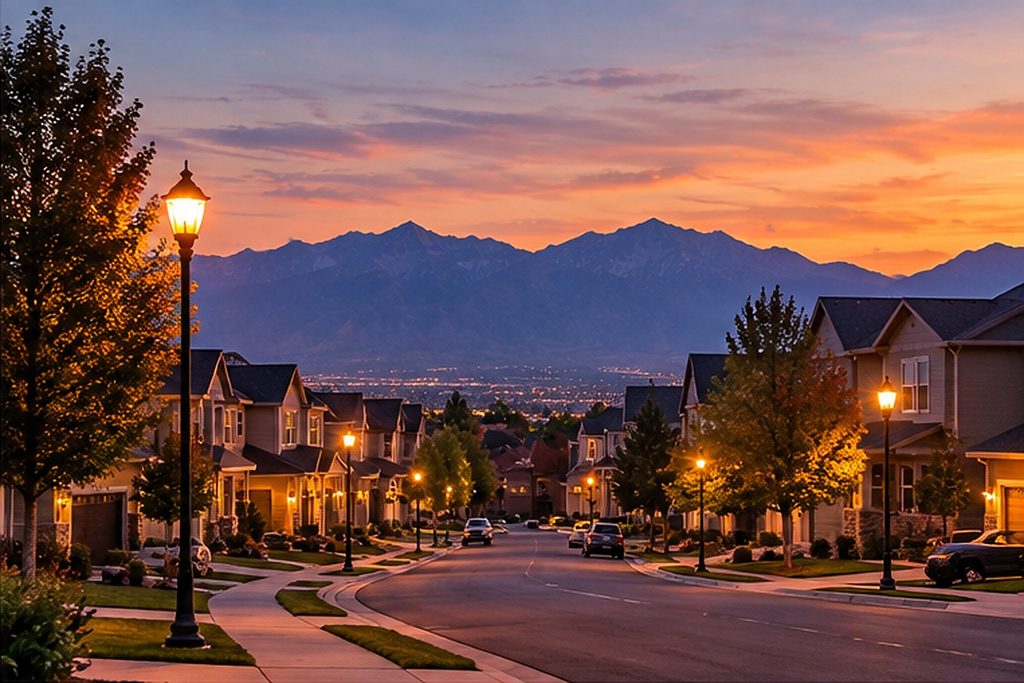
An evening visit can reveal lighting, traffic, parking, and other details you may not notice during a daytime showing.
Utah Communities to Research – Not a Safety Ranking
If you are comparing homes across Utah, you may research communities in Salt Lake County such as Salt Lake City, Sandy, South Jordan, Riverton, Draper, West Jordan, and nearby areas. In Utah County, buyers often compare Lehi, Orem, Provo, Saratoga Springs, American Fork, Pleasant Grove, Eagle Mountain, Spanish Fork, and surrounding communities. In Weber County, you may be looking at Ogden, North Ogden, South Ogden, Roy, West Haven, or other nearby areas.
These examples are not a safety ranking. Each city contains multiple neighborhoods, and conditions can vary within the same city. Use the city or county name as a starting point, then narrow your research to the actual neighborhood, police jurisdiction, or address area you are considering.
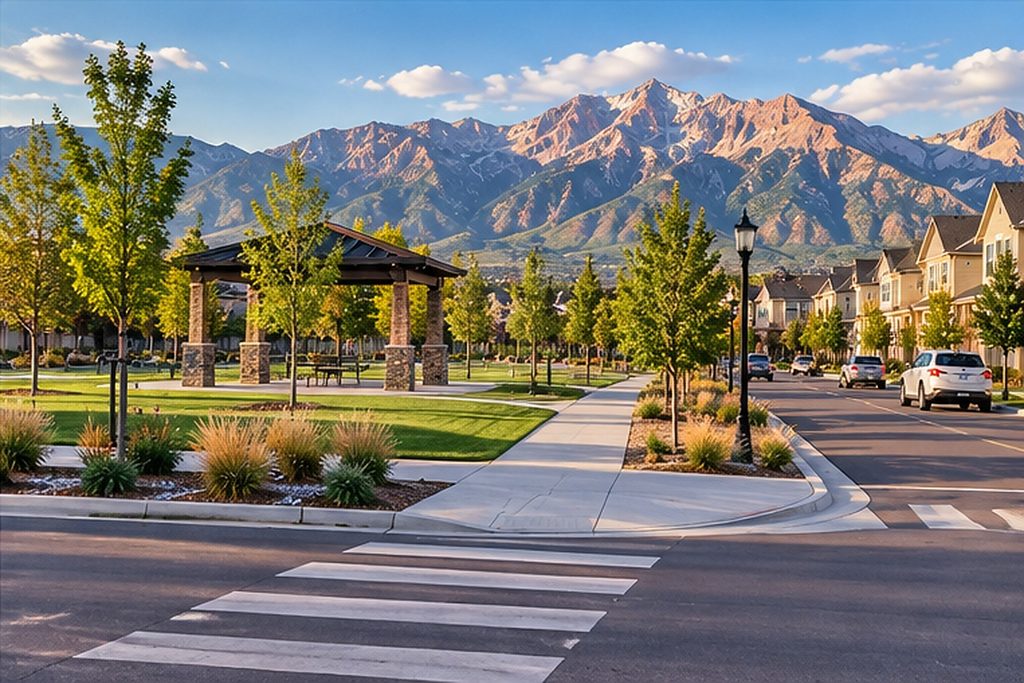
Compare the actual neighborhood, route, and nearby amenities rather than judging an entire city by one label.
What to Look at Besides Crime Statistics
Street lighting and visibility around the property and parking areas.
Traffic speed, intersections, sidewalks, crosswalks, and pedestrian access.
Distance to police, fire, medical care, and other services that matter to you.
The route you will use for work, school, shopping, recreation, or transit.
Property condition, locks, exterior lighting, fencing, and other home-specific security features.
Recent trends and offense types rather than relying on a single overall number.
How a Realtor Can Help Without Choosing a “Safe” Neighborhood for You
A real estate professional can help you compare homes, commute times, property features, market activity, and neighborhood resources, but buyers should make their own judgment about safety. Current National Association of REALTORS guidance recommends using objective information from reliable third-party sources and avoiding subjective descriptions that could steer buyers toward or away from communities.
A practical approach is for every buyer to receive the same types of resources: official law-enforcement data, local government information, maps, and links to relevant public agencies. You can then review the information according to what matters to you rather than relying on someone else’s opinion of whether a neighborhood is “good” or “safe.”
A Simple Safety Research Checklist Before You Buy
| 1. Check official dataReview Utah BCI and FBI crime information for the relevant jurisdiction and recent time period. | 2. Compare consistentlyUse the same crime categories and time periods when comparing two places. |
| 3. Visit more than onceSee the area during the day, evening, weekday, and weekend when possible. | 4. Test your routineDrive the commute, walk nearby streets, and visit the places you expect to use. |
| 5. Ask factual questionsRequest objective information from police, local government, HOA, or property management when relevant. | 6. Decide for yourselfUse the data and your observations to decide whether the location fits your comfort level. |
Frequently Asked Questions
| Can a Realtor tell me which Utah neighborhood is safest?A Realtor can share objective resources and factual information, but your personal safety judgment should come from your own research and priorities. |
| Where can I find Utah crime statistics?The Utah Department of Public Safety Bureau of Criminal Identification provides Crime in Utah dashboards, and the FBI provides national and local data through its Crime Data Explorer. |
| Should I rely on an online “safest cities” ranking?Use rankings only as a starting point. Check the source, year, methodology, reporting coverage, and the exact neighborhood you are considering. |
Final Thoughts
Before you make an offer, create a short neighborhood research routine. Check recent crime data and trends rather than one isolated statistic. Look at the types of incidents being reported. Confirm whether the agency has complete data for the period you are reviewing. Drive or walk the area at different times. Test your actual commute. Notice street lighting, traffic, sidewalks, parking, and nearby services. If something matters to you, verify it yourself instead of assuming.
The safest place to live in Utah is not a universal answer that a website or Realtor can choose for you. The right place is the one where the objective information, the home itself, your budget, and your personal comfort level all make sense together. Careful research helps you make that decision with more confidence and less guesswork.
| Comparing Utah communities for your next home?Rylee Harris can help you compare homes, commute options, property features, and objective neighborhood resources so you can make your own informed decision.Phone: +1 (208) 530-5271 | Email: ryleeharris@kw.com |